



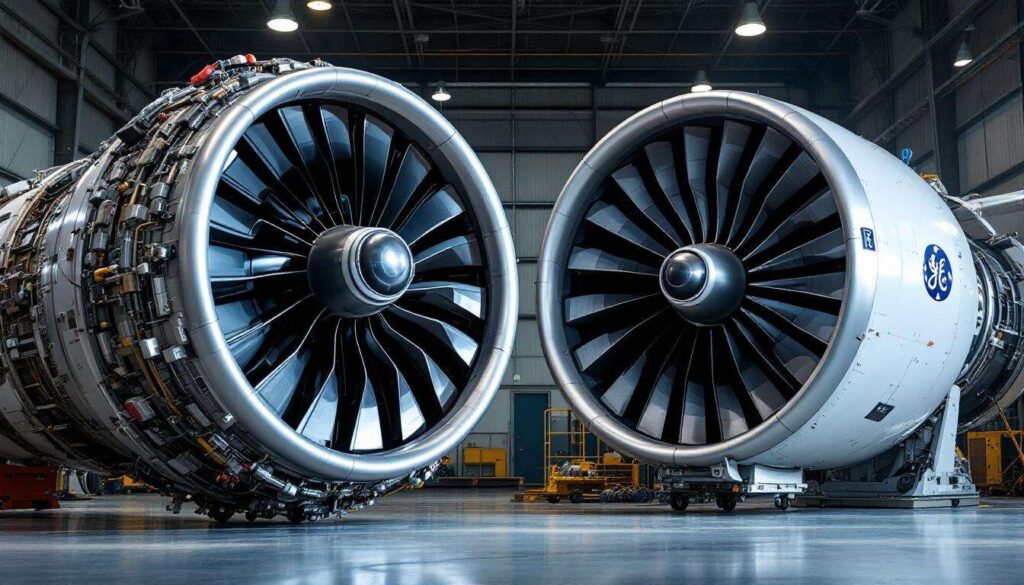
Aircraft propulsion represents one of the most competitive sectors in aerospace manufacturing, with two engineering giants standing at the forefront of innovation and technological advancement. The rivalry between these manufacturers has shaped modern aviation, driving unprecedented developments in engine design, efficiency, and performance. Each company brings distinct engineering philosophies, business models, and technological approaches that have profound implications for airlines, aircraft manufacturers, and the broader aviation ecosystem. Understanding these differences provides crucial insights into the current state and future direction of commercial aviation propulsion systems.
Innovative technologies in GE and Rolls-Royce engines
Advanced materials and manufacturing processes
The technological landscape of modern aircraft engines reveals fundamental differences in how each manufacturer approaches design challenges. GE Aerospace has pioneered the use of ceramic matrix composites (CMCs) in hot-section components, allowing engines to operate at higher temperatures whilst reducing weight. The GE9X incorporates these materials extensively, achieving a remarkable thrust-to-weight ratio that sets new industry benchmarks.
Rolls-Royce has concentrated on developing advanced titanium aluminide blades and sophisticated cooling technologies. The Trent XWB features innovative composite fan blades and a three-shaft architecture that optimises efficiency across various flight phases. This design philosophy emphasises:
- Enhanced thermal efficiency through advanced blade cooling systems
- Reduced fuel consumption via optimised compression ratios
- Extended component life through superior metallurgy
- Lower maintenance requirements due to modular design
Digital integration and predictive maintenance
Both manufacturers have embraced digital transformation, though their approaches differ significantly. GE Aerospace leverages extensive data analytics platforms that monitor engine performance in real-time, enabling predictive maintenance and operational optimisation. Rolls-Royce has developed comprehensive digital services that provide airlines with actionable insights, reducing unplanned maintenance events and improving dispatch reliability.
| Technology aspect | GE Aerospace | Rolls-Royce |
|---|---|---|
| Primary material innovation | Ceramic matrix composites | Titanium aluminide alloys |
| Engine architecture | Two-shaft design | Three-shaft configuration |
| Digital platform focus | Performance optimisation | Predictive maintenance |
These technological innovations directly influence how airlines evaluate engine performance and operational costs, setting the stage for examining efficiency metrics.
Performance and energy efficiency of aircraft engines
Thrust capabilities and power output
The GE9X stands as the most powerful commercial engine ever produced, delivering 134,300 pounds of thrust. This exceptional power enables the Boeing 777X to carry substantial payloads across ultra-long-haul routes. The engine’s massive 134-inch fan diameter contributes to its impressive bypass ratio of 10:1, enhancing propulsive efficiency.
The Trent XWB, whilst producing lower absolute thrust figures, achieves remarkable efficiency through its refined aerodynamics and optimised combustion processes. Rolls-Royce has prioritised specific fuel consumption, making the Trent XWB particularly attractive for airlines focused on operational economics rather than maximum payload capacity.
Fuel efficiency and environmental performance
Environmental considerations have become paramount in engine development. Both manufacturers claim significant improvements over previous generations:
- GE9X offers approximately 10% better fuel efficiency compared to the GE90
- Trent XWB provides 15% fuel savings versus earlier Trent variants
- Both engines meet stringent noise reduction requirements
- Emissions reductions align with international aviation standards
Operational flexibility represents another critical performance dimension. The three-shaft architecture of Rolls-Royce engines provides excellent throttle response and part-load efficiency, beneficial during descent and approach phases. GE’s two-shaft design offers simplicity and reduced maintenance complexity, appealing to airlines prioritising mechanical reliability.
These performance characteristics have broader implications beyond individual aircraft operations, influencing industry-wide trends and competitive dynamics.
Impact of innovations on the aviation industry
Aircraft manufacturer partnerships and exclusivity
The relationship between engine manufacturers and airframe producers shapes competitive dynamics throughout aviation. Rolls-Royce maintains exclusive engine supply for the Airbus A350 family, creating a tightly integrated aircraft-engine system optimised for long-range efficiency. This exclusivity provides predictable revenue streams whilst limiting airline choice.
GE Aerospace pursues a different strategy, competing for engine selection on platforms like the Boeing 787, where airlines can choose between the GEnx and Trent 1000. This competitive approach drives continuous improvement but introduces complexity for airlines managing mixed fleets.
Airline operational considerations
Airlines evaluate engines based on multiple factors beyond initial purchase price. Total cost of ownership encompasses fuel consumption, maintenance requirements, reliability, and residual value. The different approaches of these manufacturers create distinct value propositions:
| Operational factor | GE Aerospace advantage | Rolls-Royce advantage |
|---|---|---|
| Maximum range capability | Higher thrust options | Superior fuel efficiency |
| Maintenance simplicity | Two-shaft accessibility | Modular design |
| Fleet commonality | Broad platform availability | Integrated optimisation |
These operational impacts extend to financial performance and market positioning, which require careful analysis from investor perspectives.
Comparison of financial stability and engines
Revenue models and aftermarket services
Both companies generate substantial revenue from aftermarket services, though their business models differ. Rolls-Royce pioneered the “power-by-the-hour” concept, charging airlines based on engine usage rather than traditional maintenance contracts. This approach aligns manufacturer and operator interests, ensuring optimal engine performance throughout the service life.
GE Aerospace has developed comprehensive service offerings that combine spare parts supply, maintenance services, and digital monitoring. The company’s extensive global service network provides rapid response capabilities, minimising aircraft downtime and enhancing customer satisfaction.
Market share and competitive positioning
The wide-body engine market remains divided between these manufacturers, with each holding significant positions on key aircraft platforms. Market dynamics reflect:
- GE9X exclusivity on Boeing 777X providing guaranteed market share
- Trent XWB dominance on Airbus A350 ensuring stable production volumes
- Competitive selection processes on Boeing 787 creating pricing pressure
- Long-term service agreements generating predictable cash flows
Financial performance depends not only on engine sales but also on the ability to manage development costs, production efficiency, and service profitability. These financial considerations connect directly to investment risk assessment.
Risk analysis related to investments in GE and Rolls-Royce
Development programme risks
Engine development represents massive capital investment with extended payback periods. Both manufacturers have experienced challenges with new engine programmes, including technical issues, certification delays, and cost overruns. The Trent 1000 encountered durability problems requiring expensive modifications, whilst GE faced development timeline extensions on the GE9X.
These programme risks manifest through:
- Warranty claims and retrofit campaigns impacting profitability
- Delayed aircraft deliveries affecting production schedules
- Reputational damage influencing future competition outcomes
- Regulatory scrutiny increasing certification requirements
Market and operational risks
The aviation industry’s cyclical nature creates inherent volatility in engine demand. Economic downturns, geopolitical events, and health crises can dramatically reduce aircraft orders and utilisation rates. Both manufacturers must balance production capacity with uncertain demand forecasts.
Supply chain dependencies represent another critical risk factor. Complex engines incorporate thousands of components from global suppliers, creating vulnerability to disruptions. Managing these risks requires sophisticated supplier relationships and inventory strategies.
Understanding these risks provides essential context for evaluating future growth opportunities and strategic positioning.
Future growth prospects for GE and Rolls-Royce
Sustainability initiatives and alternative fuels
The aviation industry faces mounting pressure to reduce carbon emissions, driving investment in sustainable technologies. Both manufacturers are developing engines compatible with sustainable aviation fuels (SAF) and exploring hydrogen propulsion concepts. GE Aerospace has committed to ensuring all engines can operate on 100% SAF, whilst Rolls-Royce is advancing hydrogen combustion research.
These sustainability initiatives create competitive opportunities for manufacturers demonstrating environmental leadership. Airlines increasingly prioritise emissions reductions in fleet planning decisions, potentially favouring engines with superior environmental credentials.
Emerging markets and fleet expansion
Long-term growth prospects depend on expanding aviation markets, particularly in Asia-Pacific regions. Increasing passenger demand and fleet modernisation programmes create opportunities for both manufacturers. Key growth drivers include:
- Replacement of ageing aircraft with fuel-efficient models
- Expansion of long-haul route networks requiring wide-body aircraft
- Development of ultra-long-range capabilities opening new city pairs
- Increasing freight demand supporting cargo aircraft orders
The manufacturers’ ability to capitalise on these opportunities depends on maintaining technological leadership, competitive pricing, and reliable service delivery.
The contrasting approaches of these two engineering powerhouses reflect different strategic visions for aviation’s future. GE Aerospace’s emphasis on maximum performance and manufacturing scale contrasts with Rolls-Royce’s focus on efficiency and integrated optimisation. Both strategies offer compelling advantages depending on airline priorities and operational requirements. As environmental pressures intensify and markets evolve, continued innovation in propulsion technology will remain essential for maintaining competitive advantage. The distinct philosophies and capabilities of these manufacturers ensure ongoing competition that ultimately benefits airlines, passengers, and the broader aviation ecosystem through improved performance, efficiency, and sustainability.