



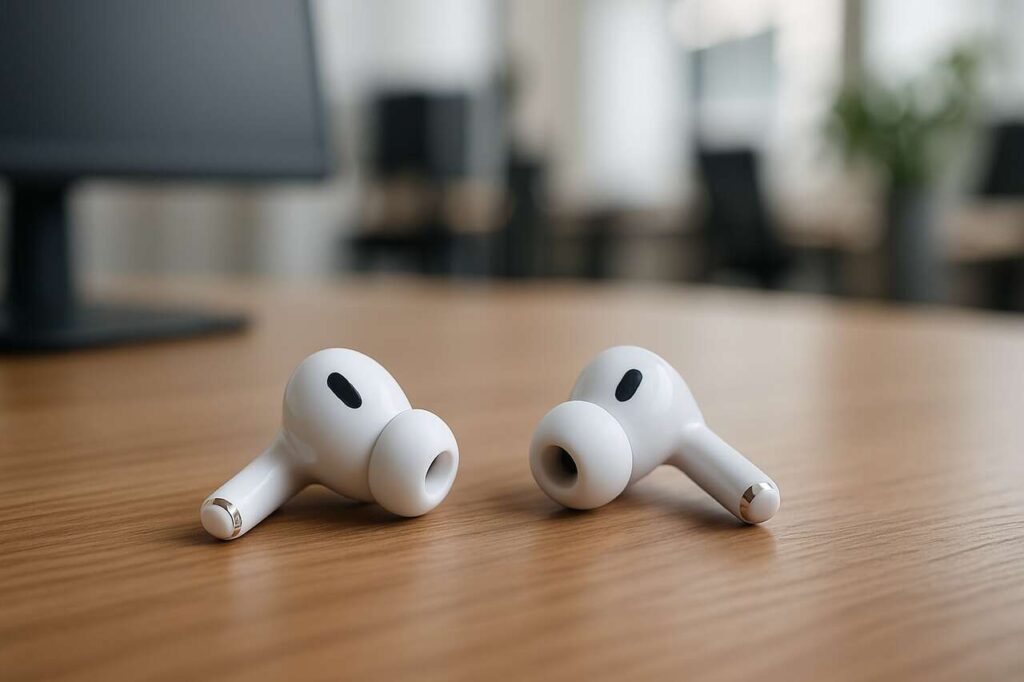
The quest for the perfect pair of earbuds has long been hampered by a fundamental compromise: choosing between open-ear designs that maintain awareness of surroundings and noise-cancelling models that deliver immersive audio isolation. Commuters, athletes, and audio enthusiasts have historically been forced to purchase multiple devices to satisfy different listening scenarios. Recent technological advancements, however, suggest this dichotomy may finally be nearing resolution, with manufacturers developing hybrid solutions that promise to deliver both experiences within a single product.
Understanding open-ear earbud technology
The mechanics of ambient sound transmission
Open-ear earbuds operate on a fundamentally different principle compared to traditional in-ear models. Rather than creating a seal within the ear canal, these devices position audio drivers near the ear opening whilst leaving the canal itself unobstructed. This design allows environmental sounds to reach the eardrum naturally, maintaining what audiologists refer to as situational awareness.
The technology typically employs directional speakers that project sound towards the ear canal without blocking it. Some implementations use bone conduction, transmitting vibrations through the cheekbone directly to the inner ear. Others rely on air conduction with carefully angled drivers that deliver audio whilst permitting ambient noise to pass through unimpeded.
Benefits and limitations of open-ear designs
The primary advantage of open-ear technology lies in safety and comfort. Users can:
- remain aware of traffic, announcements, and conversations whilst listening to music or podcasts
- avoid the discomfort and potential hygiene issues associated with prolonged ear canal insertion
- reduce the risk of hearing damage from excessive volume levels required to overcome passive isolation
- engage in physical activities without the sensation of pressure or moisture build-up
However, these benefits come with notable compromises. Bass response typically suffers due to the lack of acoustic sealing, and audio leakage becomes problematic in quiet environments. Additionally, open-ear designs struggle in noisy settings where external sounds compete with the intended audio content.
These inherent limitations have prompted manufacturers to explore whether technological innovation might bridge the gap between open-ear convenience and the immersive qualities offered by noise-cancelling alternatives.
How noise-cancelling earbuds work
Active noise cancellation fundamentals
Active noise cancellation (ANC) represents a sophisticated approach to audio isolation. The technology relies on destructive interference, where external microphones capture ambient sound waves and internal processors generate inverse waveforms that effectively neutralise unwanted noise before it reaches the listener’s eardrum.
Modern ANC systems employ multiple microphones positioned strategically on the earbud exterior and interior. Feed-forward microphones detect environmental noise, whilst feedback microphones monitor sound within the ear canal. Digital signal processors analyse these inputs and generate anti-noise signals with remarkable precision, typically updating thousands of times per second.
The immersive listening advantage
Noise-cancelling earbuds excel in environments where concentration or audio fidelity takes precedence. The technology proves particularly effective against:
- low-frequency rumble from aircraft engines, train carriages, and road traffic
- consistent background hum from air conditioning systems and office equipment
- ambient chatter in cafés, open-plan workspaces, and public transport
The acoustic seal created by in-ear designs enhances bass reproduction and overall sound quality, allowing listeners to appreciate musical details at lower volumes. This combination of passive isolation and active cancellation creates an immersive bubble that many users find essential for focused work or pure musical enjoyment.
Yet this very isolation presents challenges for those who need to remain connected to their surroundings, raising questions about whether a single device could successfully accommodate both requirements.
The challenges of audio versatility
Physical design constraints
Creating earbuds that function effectively in both open-ear and noise-cancelling configurations presents substantial engineering obstacles. The two modes require contradictory physical characteristics:
| Requirement | Open-ear mode | Noise-cancelling mode |
|---|---|---|
| Ear canal positioning | External placement | Sealed insertion |
| Driver orientation | Angled projection | Direct alignment |
| Acoustic sealing | Minimal contact | Complete isolation |
| Microphone placement | Ambient capture | Noise detection |
Traditional earbud architectures cannot satisfy these conflicting demands simultaneously. Mechanical adjustability becomes necessary, introducing complexity in terms of moving parts, durability concerns, and user interface design.
Audio processing complexities
Beyond physical considerations, dual-mode earbuds must address significant signal processing challenges. The equaliser settings optimised for open-ear listening prove inappropriate when the same device switches to a sealed configuration. Bass frequencies require substantial boosting in open-ear mode to compensate for the lack of acoustic sealing, whilst the same settings would produce overwhelming low-end response when noise cancellation engages.
Automatic detection systems must reliably identify which mode the user has selected and recalibrate audio parameters accordingly. This demands sophisticated sensor integration and processing algorithms that can adapt in real-time without introducing audible artefacts or delays.
These technical hurdles have historically kept open-ear and noise-cancelling technologies in separate product categories, but recent innovations suggest viable solutions may finally be emerging.
Innovations redefining the listening experience
Mechanical adaptability systems
The latest generation of hybrid earbuds incorporates adjustable ear hook mechanisms that enable physical repositioning of the audio drivers. These systems typically feature multiple adjustment levels and articulation points, allowing users to move the earbuds closer to or further from the ear canal entrance depending on their immediate needs.
Advanced implementations include liquid-silicone materials that maintain comfort across extended wearing periods whilst providing sufficient structural integrity for repeated adjustment. The engineering challenge lies in creating mechanisms that are simultaneously robust enough for daily manipulation yet delicate enough to avoid causing discomfort during wear.
Intelligent audio calibration
Sensor-driven equaliser adjustment represents another crucial innovation. By incorporating proximity sensors and wear-detection technology, modern dual-mode earbuds can automatically identify their current configuration and adjust audio processing parameters accordingly. This approach eliminates the need for manual sound profile switching, creating a seamless user experience.
The calibration systems analyse factors including:
- distance between driver and ear canal entrance
- degree of acoustic sealing achieved
- ambient noise levels in the surrounding environment
- user-defined preferences for different listening scenarios
Such intelligent systems ensure consistent audio quality regardless of which mode the earbuds occupy, addressing one of the primary obstacles to true versatility.
Whilst these innovations demonstrate impressive technical achievement, they inevitably raise questions about whether such complexity can deliver the sound quality users expect from dedicated devices.
The challenge of sound quality in earbuds
Acoustic compromises in hybrid designs
Audiophiles have long maintained that specialised devices outperform multi-purpose alternatives, and this principle applies to dual-mode earbuds. The physical adjustments required for mode switching introduce variables that can affect driver positioning consistency, potentially impacting soundstage precision and frequency response accuracy.
Furthermore, the need to accommodate both open-ear and sealed configurations may require driver designs that represent compromises rather than optimisations for either specific use case. Dedicated noise-cancelling earbuds can employ drivers and acoustic chambers engineered exclusively for sealed-ear performance, whilst pure open-ear designs can maximise directional projection without concern for ANC functionality.
Real-world performance considerations
Despite theoretical limitations, practical testing suggests that well-executed hybrid designs can deliver acceptable performance across both modes for the majority of users. The key lies in managing expectations: dual-mode earbuds may not match the absolute performance of flagship specialist models, but they can provide sufficient quality for everyday listening scenarios.
Critical evaluation criteria include:
- consistency of frequency response across both operational modes
- effectiveness of noise cancellation compared to dedicated ANC earbuds
- audio leakage levels in open-ear configuration
- battery life impact of dual-mode functionality
For users whose priorities centre on convenience and versatility rather than absolute audiophile-grade performance, these trade-offs may prove entirely acceptable, particularly when weighed against the alternative of carrying multiple devices.
Can they replace two types of headphones ?
Practical considerations for different user profiles
The viability of dual-mode earbuds as complete replacements depends heavily on individual usage patterns. Commuters and fitness enthusiasts who regularly transition between environments requiring awareness and isolation represent ideal candidates for hybrid solutions. The ability to adjust from open-ear mode during outdoor running to noise-cancelling mode on public transport addresses genuine practical needs.
Conversely, users with more specialised requirements may find dedicated devices preferable. Professional audio work, critical listening sessions, and extreme sports applications typically demand optimised solutions rather than versatile compromises.
The verdict on dual functionality
Current hybrid earbud technology demonstrates that functional convergence is achievable within acceptable quality parameters for general consumer use. The mechanical and processing innovations required to enable mode switching have matured sufficiently to deliver reliable performance, though not necessarily at the level of premium specialist alternatives.
For many users, the convenience of carrying a single pair of earbuds that adapts to varying circumstances outweighs any marginal performance advantages offered by maintaining separate open-ear and noise-cancelling devices. The technology represents a genuine solution to a longstanding consumer dilemma, even if it does not universally eliminate the need for specialised equipment.
The emergence of dual-mode earbuds marks a significant milestone in personal audio evolution. Whilst they may not entirely replace dedicated open-ear and noise-cancelling headphones for all users and applications, these devices successfully bridge a gap that has existed since the inception of consumer audio technology. The mechanical ingenuity enabling physical adjustment between modes, combined with intelligent audio calibration systems, delivers genuine versatility without catastrophic quality compromises. For the substantial segment of consumers prioritising convenience and adaptability over absolute performance benchmarks, a single pair of hybrid earbuds can indeed fulfil the roles previously requiring two separate devices. As the technology continues to mature, the distinction between specialist and versatile solutions may narrow further, potentially reshaping consumer expectations for personal audio equipment.