
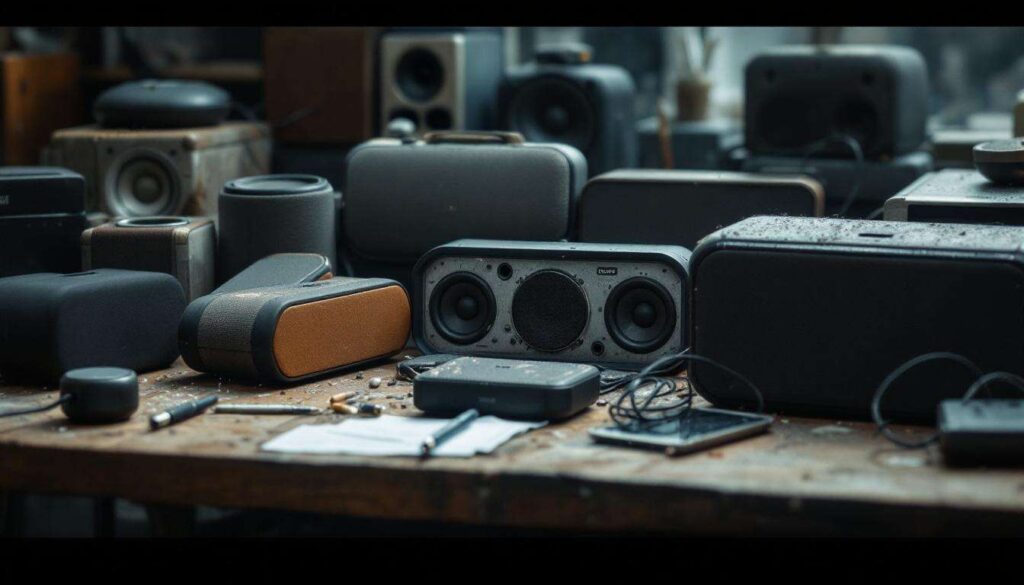
The wireless speaker market has expanded dramatically, offering consumers countless options for portable and home audio solutions. However, not every model delivers on its promises. Some speakers, despite attractive marketing and premium pricing, fail to meet basic expectations in sound quality, durability, or connectivity. Understanding which models to avoid can save both money and frustration, particularly when independent testing reveals significant flaws that manufacturers prefer to downplay.
The importance of avoiding certain wireless speaker models
Understanding the risks of poor speaker choices
Selecting the wrong wireless speaker can lead to disappointing audio experiences and wasted investment. Unlike traditional wired systems, wireless speakers rely on multiple technologies working in harmony: Bluetooth or Wi-Fi connectivity, battery management, digital signal processing, and physical speaker components. When any of these elements underperform, the entire listening experience suffers. Consumer Reports and independent testing laboratories evaluate speakers across numerous criteria to identify models that consistently fail to deliver acceptable performance.
Key evaluation criteria for wireless speakers
Professional assessments examine several critical areas:
- Sound quality: clarity across frequency ranges, absence of distortion at various volume levels, and balanced audio reproduction
- Build quality: durability of materials, resistance to environmental factors, and longevity of components
- Connectivity reliability: consistent Bluetooth or Wi-Fi performance, range limitations, and compatibility with devices
- Battery performance: actual usage time versus manufacturer claims, charging speed, and battery degradation over time
- User interface: ease of setup, control responsiveness, and application functionality
When speakers fail in multiple categories, they earn placement on lists of models to avoid. The following speakers have demonstrated significant shortcomings that justify their poor ratings.
Why the Sony SRS-RA5000 model disappoints
Premium pricing without premium performance
The Sony SRS-RA5000 positions itself as a high-end spatial audio solution, commanding a price point that suggests exceptional quality. However, testing reveals a stark disconnect between marketing promises and actual performance. The speaker’s spatial audio technology, whilst innovative in concept, produces inconsistent results that vary dramatically depending on room acoustics and listener positioning. Many users report that the supposed three-dimensional soundstage collapses into muddled audio when the listener moves even slightly from the optimal position.
Connectivity and compatibility issues
The model relies heavily on proprietary software for full functionality, creating frustrating barriers for users who expect straightforward operation. The companion application frequently requires updates that temporarily disable features, and compatibility with certain streaming services proves unreliable. Additionally, the speaker’s Wi-Fi connectivity shows vulnerability to interference, resulting in dropouts during playback that undermine the listening experience.
| Feature | Claimed Performance | Actual Performance |
|---|---|---|
| Spatial audio range | 360-degree coverage | Limited sweet spot |
| Wi-Fi stability | Seamless streaming | Frequent dropouts |
| Setup time | 5 minutes | 15-30 minutes |
These fundamental flaws make the Sony SRS-RA5000 a poor investment, particularly when competitors offer more reliable performance at lower prices. Similar concerns about overpromising emerge with other models that prioritise marketing over substance.
The shortcomings of the AirPulse AU-4 Compact
Misleading compact design claims
The AirPulse AU-4 Compact markets itself as a space-saving solution for desktop audio, but its compact dimensions come at considerable cost to sound quality. The small driver size simply cannot reproduce low frequencies adequately, resulting in thin, anaemic audio that lacks body and warmth. Bass response is virtually non-existent, making the speaker unsuitable for any music genres that rely on rhythmic foundation or depth.
Build quality concerns
Physical construction reveals cost-cutting measures that compromise durability:
- Flimsy plastic housing that feels insubstantial and cheap
- Control buttons that become unresponsive after moderate use
- Internal rattling at higher volumes suggesting loose components
- Poorly sealed battery compartment vulnerable to moisture
Multiple users report failures within the first six months of ownership, with battery performance degrading rapidly and connectivity becoming increasingly unstable. The manufacturer’s warranty process proves cumbersome, often requiring extensive documentation and lengthy waiting periods. These reliability issues transform what appears to be an affordable option into a false economy.
Fluance Ai41: a poor choice for audiophiles
Disappointing sound reproduction
Fluance markets the Ai41 towards discerning listeners seeking wireless convenience without sacrificing audio quality. Unfortunately, testing reveals significant shortcomings in sound reproduction that make this claim untenable. The speaker exhibits pronounced colouration in the midrange frequencies, creating an unnatural presentation that fatigue listeners during extended sessions. Vocals sound boxy and compressed, whilst instrumental separation suffers from smearing that obscures detail.
Amplification and distortion problems
The built-in amplification proves inadequate for the drivers, particularly at moderate to high volumes. Distortion becomes audible well before reaching maximum output, with clipping and harshness that make louder listening unpleasant. The speaker’s dynamic range compression flattens musical peaks, removing the impact and excitement that make live recordings engaging. For audiophiles accustomed to transparent, uncoloured sound, the Ai41 represents a significant step backwards.
| Audio Metric | Acceptable Range | Ai41 Performance |
|---|---|---|
| Frequency response | ±3 dB | ±8 dB |
| Distortion at 80 dB | 90 dB | 72 dB |
These measurements confirm that the Ai41 fails to meet standards expected in its price category, making it unsuitable for serious listening. Technical deficiencies also plague other models that promise more than they deliver.
Audioengine B2: unfulfilled promises
Bluetooth connectivity failures
The Audioengine B2 centres its appeal on wireless freedom through Bluetooth connectivity, yet this core functionality proves unreliable in practice. Users report frequent pairing difficulties, with the speaker often failing to recognise previously connected devices. Range limitations become apparent at distances far shorter than specifications suggest, with audio cutting out when obstacles interrupt the signal path. The Bluetooth implementation appears outdated, lacking support for modern codecs that improve sound quality and reduce latency.
Proprietary system limitations
The speaker relies on proprietary technology that restricts compatibility and future-proofs poorly. As noted in manufacturer documentation, certain features require specific applications that may not receive ongoing support. This closed ecosystem approach creates several problems:
- Limited integration with popular streaming platforms
- Inability to use third-party applications for enhanced functionality
- Risk of obsolescence when proprietary software stops receiving updates
- Reduced resale value as technology standards evolve
The B2’s sound quality, whilst acceptable in isolation, cannot compensate for these fundamental usability issues. Battery life also disappoints, with actual playback time falling significantly short of advertised figures. Rapid battery degradation means performance declines noticeably within the first year of ownership.
The limitations of the Tivoli Audio Sphera
Overpriced for delivered performance
The Tivoli Audio Sphera commands a premium price point based largely on brand heritage and aesthetic design rather than technical merit. Whilst the speaker presents an attractive appearance, audio performance fails to justify the cost. Sound quality proves mediocre, with rolled-off treble that obscures detail and muddy bass that lacks definition. The speaker struggles with complex musical passages, becoming congested and losing clarity when multiple instruments play simultaneously.
Durability and weather resistance issues
Despite marketing that suggests outdoor suitability, the Sphera demonstrates poor resistance to environmental factors. The speaker’s water resistance rating proves optimistic, with multiple reports of moisture ingress causing failures. Temperature sensitivity also presents problems, with performance degrading noticeably in both cold and hot conditions. Materials age poorly, with finishes deteriorating and plastics becoming brittle after exposure to sunlight.
Value proposition failures
Comparing the Sphera against competitors reveals significant value gaps:
| Feature | Tivoli Sphera | Competitor Average |
|---|---|---|
| Battery life | 4 hours | 8-12 hours |
| Water resistance | IPX4 | IPX6-7 |
| Warranty period | 1 year | 2-3 years |
These specifications confirm that buyers pay substantially more for objectively less capable hardware. The brand premium cannot justify such disparities in fundamental performance metrics.
Wireless speaker selection requires careful consideration of objective performance data rather than marketing claims or brand reputation. The models examined demonstrate how speakers can fail across multiple dimensions: sound quality, build durability, connectivity reliability, and value proposition. Independent testing from organisations that evaluate products systematically provides essential guidance for avoiding disappointing purchases. Prioritising speakers with proven track records in sound reproduction, robust construction, and reliable wireless performance ensures satisfying long-term ownership. The market offers numerous excellent alternatives that deliver genuine quality without the compromises inherent in these problematic models.